30-Year Study Links Sleeping Nine or More Hours to 17% Higher Mortality Risk
09/21/2026 / By Coco Somers

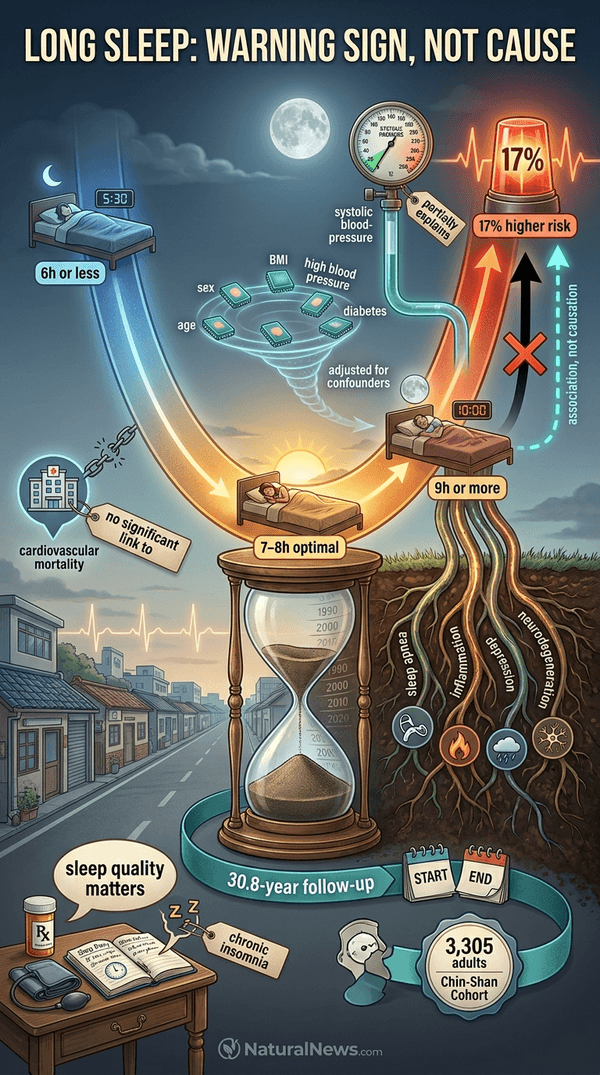
Adults who usually slept nine or more hours per night had a 17% higher risk of death from any cause compared with those who slept seven to eight hours, according to a study that followed 3,305 adults in Taiwan for a median of 30.8 years.
The findings were reported Sept. 18, 2026, by mindbodygreen, citing the long-running Chin-Shan Community Cardiovascular Cohort. The study grouped participants by their usual sleep duration: six hours or less, seven to eight hours, or nine hours or more.
The study found no significant association between long sleep and cardiovascular mortality, and short sleep of six hours or less was not significantly linked to higher mortality, according to the report.
Study Details and Methods
The research analyzed data from the Chin-Shan Community Cardiovascular Cohort, a long-running study in Taiwan, the report stated. Participants were divided into three groups based on their usual sleep duration: six hours or less, seven to eight hours, or nine hours or more.
Researchers adjusted for factors including age, sex, body mass index, high blood pressure, and diabetes, according to the report. The report stated that no meaningful differences in the association were found based on age, sex, body mass index, high blood pressure, or diabetes.
The median follow-up of 30.8 years allowed researchers to examine how sleep habits in adulthood related to health outcomes decades later, researchers said.
Long Sleep and Mortality: What the Study Found
After accounting for other health and lifestyle factors, participants who regularly slept nine or more hours had a 17% higher risk of death from any cause compared with those who slept seven to eight hours, according to the study. Long sleep was not significantly associated with cardiovascular mortality specifically, the report stated.
Systolic blood pressure, the top number in a blood pressure reading, partially explained the relationship between long sleep and mortality, researchers said. The study could not determine exactly why the association exists; researchers said long sleep may reflect an underlying health condition, poor sleep quality, or a naturally higher sleep need.
One possible explanation involves the finding that systolic blood pressure partially accounted for the link between long sleep and mortality. Other factors could also play a role, including the possibility that needing more sleep sometimes reflects an underlying health condition or poor sleep quality.
The findings show an association, not causation, and do not mean that sleeping nine or more hours causes higher mortality risk, according to the report. Earlier epidemiological research has also described a U-shaped association between sleep duration and mortality, in which both long and short sleep are linked to elevated risk [1].
Limitations and Context
The study was observational and could not establish cause and effect, the report stated. Researchers noted that long sleep may be a clue rather than the culprit.
The study also found that sleeping six hours or less was not significantly associated with higher mortality risk in this cohort, researchers said. The report stated that the reasons for the association remain undetermined and require further investigation.
Prior research has linked insomnia and other sleep disturbances to poorer health outcomes, with one analysis finding the risk of dying from any cause among people with chronic insomnia to be elevated compared with those without insomnia [2]. Separate research on sleep-disordered breathing has reported higher risks of cognitive and cardiovascular problems [3].
Guidance for People Who Sleep Nine or More Hours
The report advised against forcing less sleep because of the study; instead, it suggested using sleep patterns as one piece of information about overall health. According to the report, people should pay attention to persistent changes in sleep duration and discuss them with a healthcare professional.
The report recommended checking how rested a person feels, monitoring blood pressure, keeping a consistent sleep schedule, and looking beyond sleep trackers. The report stated: “Longer sleep isn’t automatically a sign that something is wrong.” It added that persistent exhaustion or changed sleep needs may warrant a discussion with a doctor.
General guidance on sleep duration draws on a review of more than 300 studies published between 2004 and 2014, which concluded that most adults need seven to nine hours per night [2].
References
- Sudhansu Chokroverty. “Sleep Disorders Medicine”.
- Mercola.com. “Sleep: Why You Need It and 50 Ways to Improve It”. Mercola.com. March 29, 2018.
- NaturalNews.com. “Snoring Linked to Cardiovascular and Cognitive Risks, Clinicians Say; Natural Approaches Draw Attention”. September 14, 2026.
Explainer Infographic
Submit a correction >>
Tagged Under:
dangerous, discoveries, health science, long sleep, longevity, men's health, Mind, mind body science, mortality risk, real investigations, research, sleep, women's health
This article may contain statements that reflect the opinion of the author
RECENT NEWS & ARTICLES