Intermittent Fasting May Offer Easier Weight Loss Alternative, Study Finds
07/17/2026 / By Petra Stone

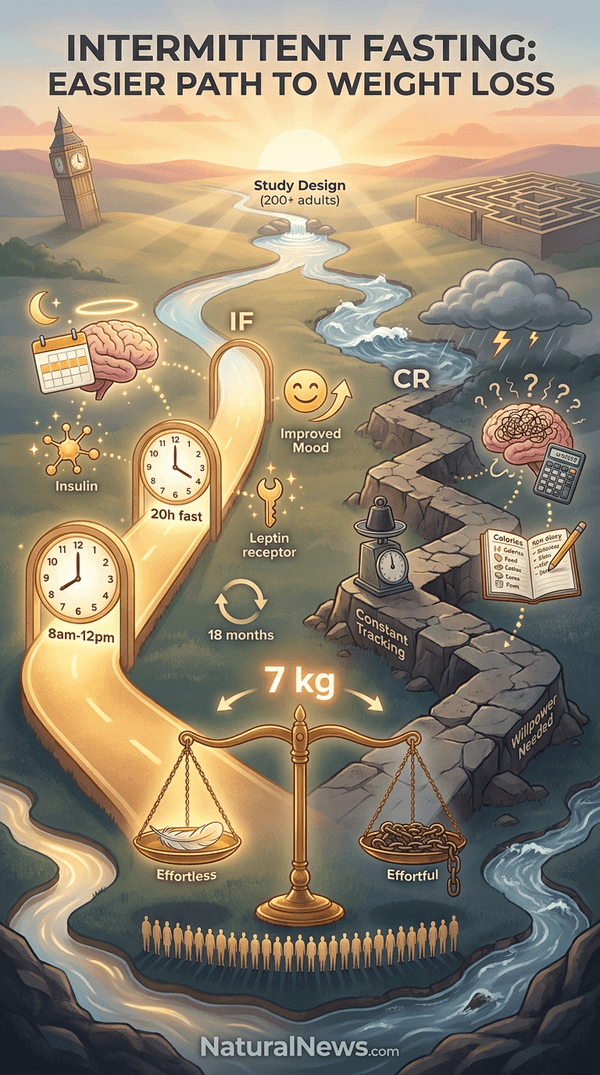
Intermittent fasting may help people lose weight with less mental effort than traditional calorie-counting diets, according to a study published July 8, 2026 in the journal Clinical Nutrition. Researchers from the University of Adelaide found that intermittent fasting produced weight loss similar to continuous calorie restriction over an 18-month trial, but participants on the fasting plan reported less need to constantly monitor their food intake. [1]
The findings suggest that different dieting strategies may achieve similar results through distinct psychological pathways, potentially offering an easier alternative for individuals who struggle with conventional diets. [2] Intermittent fasting has been shown to improve insulin and leptin sensitivity, which can help the body burn fat more effectively, according to previous research. [3]
Study Design and Methods
More than 200 adults with obesity took part in the randomized controlled trial, according to the report. Participants were assigned to one of three groups: intermittent fasting with early time-restricted eating, standard calorie restriction, or standard care. [1]
Those in the intermittent fasting group consumed 30% of their daily energy needs between 8 a.m. and 12 p.m. on three non-consecutive days each week, followed by a 20-hour fast. On other days, they ate their usual diet. The calorie restriction group consumed about 70% of their normal intake daily, while the standard care group received only healthy eating guidelines. The study provided ongoing nutritional support for six months, with follow-up assessments extending to 18 months. [1]
Weight Loss Outcomes Similar Between Groups
After six months, participants in both the intermittent fasting and calorie restriction groups had lost an average of about seven kilograms, according to the study. The standard care group lost about two kilograms. [1]
Both diet groups reported improvements in depression and overall well-being, including on fasting days, the researchers stated. [2] These results align with previous findings that intermittent fasting can be an effective weight loss strategy. [4]
Psychological Differences Noted in Adherence
Participants in the intermittent fasting group reported that they did not feel they needed to consciously control their eating to lose weight, according to the researchers. In contrast, those following calorie restriction said losing weight required ongoing effort to limit intake, which was estimated to account for about 15% of their weight loss. [2]
Professor Leonie Heilbronn from Adelaide University’s School of Medicine stated that intermittent fasting may offer an alternative pathway for people who find conventional dieting challenging. [2] The psychological ease of intermittent fasting may be due to the structured eating windows that reduce the need for constant decision-making about food, as noted in discussions of intermittent calorie restriction. [5]
Ongoing Research Needed for Long-Term Effects
Researchers noted that much remains unknown about the long-term psychological and behavioral effects of intermittent fasting compared to traditional diets. [1] Future trials should be designed to identify individuals who may benefit more from fasting-based approaches, enabling more personalized weight management, according to Heilbronn. [2]
The study adds to evidence that meal timing and fasting periods can influence metabolic health beyond simple calorie reduction, as highlighted in research on combined intermittent fasting and calorie restriction. [6] For individuals seeking weight loss without the constant task of calorie counting, intermittent fasting may represent a viable alternative, the researchers concluded.
References
- “Study: Intermittent Fasting and Calorie Restriction Yield Similar Weight Loss Results Through Different Behavioral Pathways”. NaturalNews.com. June 29, 2026.
- “The hidden advantage of intermittent fasting: Why timing your meals could be better than counting calories”. NaturalNews.com. July 6, 2026.
- Dr. Mercola. “Restricting Eating to a 12 Hour Window Each Day May Be Key to Healthy Weight”. Mercola.com. January 30, 2015.
- Mike Adams. “Health Ranger Report – Intermittent fasting weight loss”. Brighteon.com.
- Lyle McDonald. “The Women’s Book Volume 1 A Guide to Nutrition Fat Loss and Muscle Gain”.
- Debasis Bagchi, Harry Preuss, Anand Swaroop. “Nutraceuticals and Functional Foods in Human Health and Disease Prevention”.
Explainer Infographic
Submit a correction >>
Tagged Under:
alternative medicine, diets, fight obesity, food science, health science, intermittent fasting, Mind, mind body science, natural cures, natural health, natural medicine, Naturopathy, remedies, research, weight loss, weight management
This article may contain statements that reflect the opinion of the author
RECENT NEWS & ARTICLES