Study Links Air Pollution Exposure to Changes in Cellular Fat Metabolism
10/06/2026 / By Iva Greene

A recent study found changes in the way the body processes fat among mice and humans exposed to higher levels of air pollution, according to researchers who said the findings point to a possible pathway by which polluted air may affect mitochondria, the energy-producing structures inside cells.
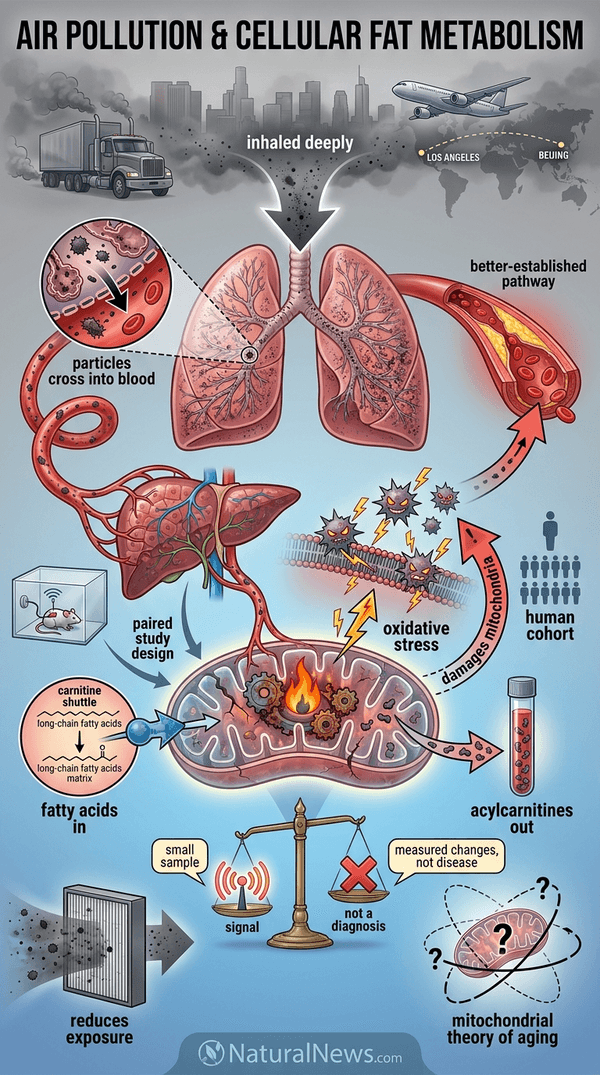
The research combined a controlled animal experiment with a small human cohort. Mice were exposed to either diesel exhaust or filtered air, while 26 healthy adults moved from Los Angeles to Beijing for 10 weeks, where they encountered higher levels of fine-particle pollution, according to the study.
Researchers said the results do not prove that air pollution causes mitochondrial dysfunction in people. The human group was small, and the study measured changes in the body rather than following participants for years to determine whether they developed disease, the study stated.
Study Design and Exposure
In the animal portion of the study, mice were exposed to either diesel exhaust or filtered air for two weeks, according to the researchers. Earlier animal research had found that diesel exhaust exposure could alter blood fats and affect mitochondria in the liver, which prompted the investigators to examine whether people exposed to higher levels of air pollution showed similar changes.
The human portion followed 26 healthy adults who moved from Los Angeles to Beijing for 10 weeks. During that period, the participants experienced much higher levels of fine-particle pollution than they had in Los Angeles, the study stated. Researchers analyzed blood samples from both the mice and the human participants, looking for changes in molecules involved in fat metabolism and oxidative stress.
The design allowed researchers to compare controlled exposure in animals with real-world exposure in people. According to researchers, the mouse results provided a closer look at what happens inside cells, while the human samples offered evidence that similar biological signals appear in people breathing polluted air. The study’s authors described the combination as a way to connect laboratory findings with observations in a human population.
Separately, researchers have documented broader concerns about environmental exposures. Endocrine-disrupting chemicals, for example, are linked to growth, neurological and learning disabilities, obesity, diabetes, cardiovascular disease and some cancers, and they are found in food packaging, nonorganic food, nonstick cookware, detergents, cosmetics and products with fragrance [1].
Findings on Fat Metabolism and Mitochondria
Both the mice and the human participants showed similar changes in how the body was processing fat, the study found. One of the clearest clues involved compounds called acylcarnitines, which can build up when cells are not breaking down fatty acids efficiently, according to the researchers.
The mouse results gave researchers a closer look at what was happening inside cells. Tests of liver tissue showed that mitochondria were not producing energy as efficiently after diesel exhaust exposure, the study stated. The human participants exposed to higher pollution levels also showed changes linked to fat damage and to exposure to pollutants commonly produced by vehicle exhaust and other combustion sources, according to researchers.
The findings fit into a larger body of work on how oxidative stress affects cellular energy production. Free radicals, which are produced in excess in reaction to external insults such as air pollution, ultraviolet light and stress, can damage cell membranes and halt energy production by damaging mitochondria, according to prior research on antioxidants and free radicals [2]. Some researchers have speculated that the rate of mitochondrial damage might determine life span [3].
Researchers said the convergence of animal and human data was notable but did not establish that pollution directly impairs mitochondrial function in people. They described the acylcarnitine signal as a potential marker worth investigating further rather than a confirmed mechanism of disease.
Limitations and Existing Research
The study’s authors acknowledged several limitations. The human group was small, and researchers measured changes in the body rather than following participants over years to see whether they developed disease, the study stated. The findings do not establish that air pollution causes mitochondrial dysfunction in people, researchers said.
Inflammation remains a better-established way that air pollution can affect cardiovascular health, according to prior research. Polluted air can promote inflammation and changes in blood vessels that contribute to plaque buildup and heart disease. The new study suggests there may be another piece to the story: if pollution makes it harder for cells to process fat and produce energy, it could add to the metabolic stress caused by long-term exposure, according to researchers.
Researchers and independent health writers have emphasized practical steps to reduce exposure. Reducing air pollutants by placing HEPA or ULPA filters in the home is one recommendation, because allergens and particulate matter from industrial pollution increase oxidation and irritate the immune system, according to prior guidance on metabolic health [4]. Exposure to air and heat also greatly increases the oxidation of fats and the production of free radicals, according to research on nutrition and brain health [5].
Broader environmental health research has documented other pollution-related risks. An analysis of data from six epidemiological studies found that increased exposure to outdoor air pollution in early life can make it harder for children to learn and process information, especially in terms of critical thinking and non-verbal tasks [6]. Exposure to methylmercury can damage brain function and development in fetuses and children, and there is a correlation between higher blood levels of mercury early in life and lower IQs [7].
Conclusion
For people concerned about exposure, researchers and health writers recommend checking the Air Quality Index before exercising outdoors, especially during wildfire smoke or pollution spikes, and taking hard workouts indoors when air quality is poor. Keeping indoor air cleaner with a HEPA air purifier may help reduce indoor exposure when pollution is consistently high where a person lives.
The takeaway, researchers said, is that air pollution may put extra strain on the body’s energy systems, not just the lungs and blood vessels. While the study does not prove that polluted air causes mitochondrial dysfunction in people, it offers a new avenue for scientists to explore as they work to understand how environmental exposures shape metabolic health over a lifetime.
References
- Top Five Tips to Avoid Dangerous Chemicals – Mercola.com, February 26, 2020
- Averys sports nutrition almanac by Burke Ed 1949-Gastelu Daniel
- Age-proof your body by Elizabeth Somer_1
- Ultrametabolism the simple plan for automatic weight loss awakening the fat-burning DNA hidden in your body by Hyman Mark 1959-2
- Mind Food and Smart Pills by Ross Pelton
- Air Pollution Can Affect Children’s Ability to Learn and Think Critically. https://childrenshealthdefense.org/defender/air-pollution-affect-childrens-ability-learn-think-critically/
- Mercury Is Especially Toxic to Kids — Here’s How It Gets From Coal-Burning Power Plants to Your Child’s Food. https://childrenshealthdefense.org/defender/mercury-toxic-kids-coal-power-plants-food/
Explainer Infographic
Submit a correction >>
Tagged Under:
air quality, cellular damage, chemical violence, dangerous, health hazards, health science, indoor air, metabolic health, poison, Public Health, pulmonary function, research, respiratory health, toxic chemicals, toxins
This article may contain statements that reflect the opinion of the author
RECENT NEWS & ARTICLES