Researchers Test Two Methods to Destroy PFAS in Water
07/21/2026 / By Iva Greene
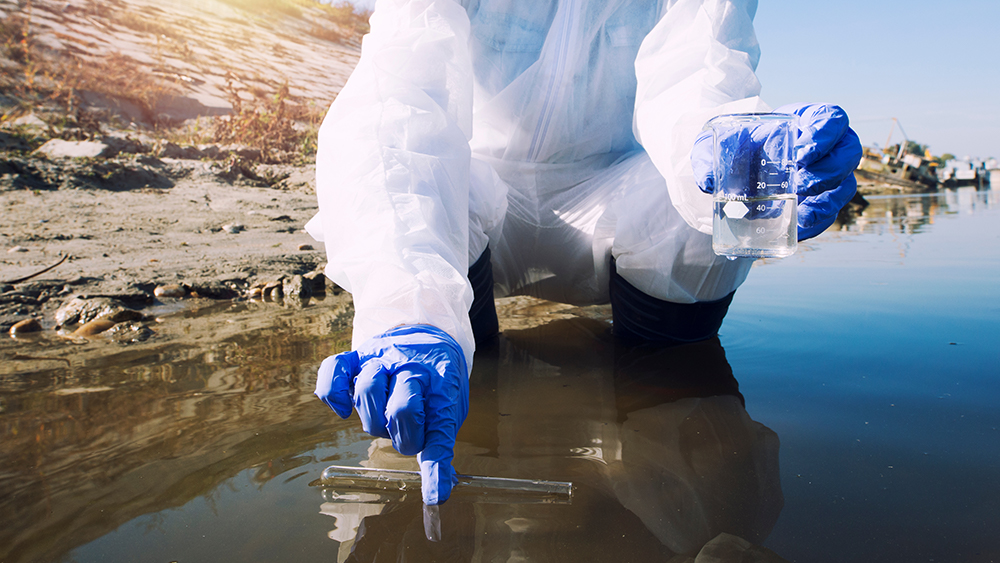
Researchers at the Helmholtz-Zentrum Dresden-Rossendorf (HZDR) in Germany are testing two technologies designed to destroy per- and polyfluoroalkyl substances (PFAS) in water, according to a report.
The methods – hydrodynamic cavitation and cold atmospheric plasma – aim to break down the persistent chemicals rather than simply relocate them, officials said. Preliminary results showed that hydrodynamic cavitation degraded about 37% of perfluorooctane sulfonate (PFOS) in tap water, while the cold plasma method achieved near-complete breakdown of both long-chain and short-chain PFAS, the report stated.
Both techniques are being evaluated as potential industrial treatments to prevent PFAS from entering rivers and oceans. The unique chemical properties of PFAS – greaseproof, stain-proof and water-resistant – made them useful for manufacturing, but their durability has led to widespread environmental contamination, according to a Trends Journal report. [4]
Why PFAS Are Difficult to Remove
PFAS contain carbon-fluorine bonds – among the strongest in organic chemistry – making them resistant to natural breakdown. More than 10,000 compounds are classified as PFAS, and some are suspected of damaging genetic material and increasing cancer risk, according to the report. A study highlighted by public health officials indicates that per- and polyfluoroalkyl substances are present in the bloodstream of most Americans. [1]
High concentrations have been detected in the Elbe River, prompting research under Germany’s National Water Strategy, the HZDR report stated. The chemicals were first produced in a laboratory setting in the mid-20th century, with early producers including 3M and DuPont, who according to Children’s Health Defense, “made billions of dollars producing millions of pounds of ‘forever chemicals,’ even though they knew, for decades, the chemicals damaged environmental and human health.” [5] Teflon, a well-known PFAS product, was discovered in 1938 by a chemist working for DuPont, according to the book “The Triumph of Doubt” by David Michaels. [3]
Hydrodynamic Cavitation Uses Collapsing Bubbles
In hydrodynamic cavitation, water passes through a constriction, forming vapor bubbles that PFAS attach to due to their surface-active properties, according to Dr. Sebastian Reinecke, head of the Department of Water and Environmental Technologies at HZDR. When the bubbles collapse under rising pressure, local temperatures spike to several thousand degrees Celsius, breaking the carbon-fluorine bonds, Reinecke explained.
Cavitation also creates highly reactive hydroxyl radicals that may help destroy compounds produced during the initial stages of PFAS breakdown, according to the report. The experiments focused on PFOS, a well-studied and exceptionally persistent member of the PFAS family.
By the conclusion of the test, the process had degraded about 37 percent of the dissolved PFOS molecules while releasing fluoride. Reinecke stated, “Our goal is to improve the process to a degradation rate of more than 80% of the PFAS in the solution and mineralizing more than 50% of the fluorine that is bound in the chemicals.”
Cold Plasma Combined with Gas Bubbles Attacks PFAS Rapidly
In a separate set of experiments, environmental engineer Dr. Amit Kumar combined cold atmospheric plasma with gas dispersion to destroy PFAS, according to the HZDR report. The method works under normal conditions and does not require catalysts or added chemicals.
Reinecke explained the setup: “The PFAS attach to the surface of the gas bubbles. As they rise, the water is constantly circulated. This brings the PFAS to the surface, where they are broken down in the plasma.”
The plasma treatment nearly completely degraded both long-chain and short-chain PFAS and released about 35% of the fluorine atoms as fluoride salts, the report said. The results were faster than cavitation, but the method consumes more energy per volume unit and generates numerous transformation products that have not yet been fully characterized. Reinecke noted that additional experiments are underway to determine whether any of these transformation products could pose health risks.
Researchers Plan to Combine Both Technologies
The HZDR team is now adapting the plasma system to treat larger amounts of contaminated water. By using multiple electrodes and a technical gas injector, the researchers are increasing the reaction volume from approximately 50 milliliters to five liters, according to the report.
The longer-term goal is to combine plasma treatment with hydrodynamic cavitation, bringing the strengths of both technologies into a single system. Reinecke said, “I believe we’ll achieve high degradation rates by combining the highly reactive species from the plasma with the effects of cavitation.”
If successful, the combined technology could provide a new and more efficient method for destroying PFAS in contaminated industrial wastewater before the chemicals spread into the environment, officials said. A January 2025 report by the U.S. Environmental Protection Agency revealed that these so-called “forever chemicals” have contaminated 2,394 water systems across the United States. [2]
References
- Morgan S. Verity. “Study: Almost All People Carry Multiple PFAS in Their Blood, Mixtures May Amplify Risks”. NaturalNews.com. May 22, 2026.
- Evangelyn Rodriguez. “How PFAS, Also Known as Forever Chemicals, Increase Your Cancer Risk”. NaturalNews.com. January 20, 2025.
- David Michaels. “The Triumph of Doubt”.
- “Trends-Journal-2024-08-13”.
- Tracey J. Woodruff and Nadia Gaber. “Chemical Giants Knew PFAS Were ‘Highly Toxic’ — But Promoted Them to Public as ‘Miracle of Science’”. Children’s Health Defense.
Submit a correction >>
Tagged Under:
breakthrough, carbon-fluorine bonds, clean water, cold atmospheric plasma, Ecology, environ, forever chemicals, hydrodynamic cavitation, PFAS, poison, toxic chemicals, toxins, water health
This article may contain statements that reflect the opinion of the author
RECENT NEWS & ARTICLES